
Cardiovascular disease remains the leading cause of death in both the United States and Europe. Yet while the diagnosis is the same, the path after a heart attack often unfolds very differently.
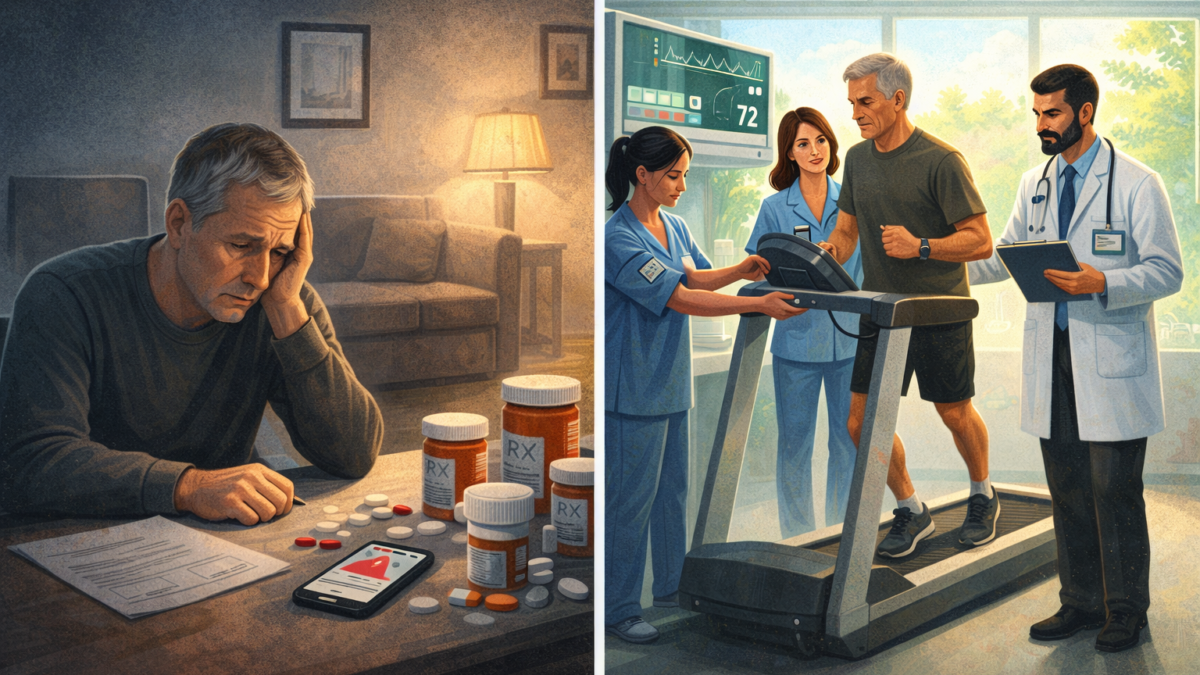
In the U.S., patients receive some of the most advanced acute cardiac care in the world. Emergency response is fast, technology is cutting-edge, and lives are frequently saved within hours. But just days after discharge, structure disappears. Patients are sent home with medications and brief instructions — and little ongoing guidance. As a result, nearly one in five Americans is readmitted within 30 days after stent placement.
In many European countries, recovery begins automatically. Cardiac rehabilitation is built into the treatment pathway, seamlessly continuing after hospital discharge. Patients are not left to navigate insurance, logistics, or referrals alone. Recovery is considered a second phase of treatment, not an optional add-on.
From the same heart attack, two very different trajectories can emerge: one toward recurrence, and one toward recovery.
The contrast becomes especially visible in how care teams function. In the United States, cardiology follow-up visits often last no more than 10–12 minutes. Within that time, physicians must review symptoms, interpret tests, meet insurance requirements, and complete extensive documentation. There is rarely space for education, emotional support, lifestyle counseling, or long-term behavior change — the very factors that reduce future risk.
European systems rely on multidisciplinary care. Alongside cardiologists, patients work with nurses, physiotherapists, dietitians, psychologists, and rehabilitation specialists. One professional monitors symptoms and blood pressure, another addresses anxiety, another guides safe physical activity and daily routines. This integrated approach strengthens recovery and significantly lowers the chance of a second cardiac event.
Procedural statistics reflect this difference. In the U.S., stents are placed two to three times more often than in many European countries. While many interventions are life-saving, research shows that some repeat procedures could be avoided through structured follow-up and aggressive risk-factor management. Financial incentives favor interventions, not months of guided recovery — leading to excellent acute outcomes but poor continuity.
Cardiac rehabilitation technically exists in the United States, yet only 20–30% of eligible patients ever enroll. In parts of Europe, participation exceeds 70%. Over the past decades, hundreds of U.S. rehabilitation centers have closed, largely due to inadequate insurance reimbursement that fails to cover operational costs.
Can America adopt the strengths of the European model without losing its technological advantages? In many ways — yes. But recovery cannot rely on fragmented programs alone. It requires structure, trained professionals, and continuity.
This is where Heart Recovery Coaches emerge. These are not wellness motivators, but specialists trained in cardiac physiology, risk management, behavioral psychology, and post-event adaptation. They support patients precisely where the medical system steps back — during the fragile transition from hospital to everyday life. They help transform medical advice into daily habits, recognize early warning signs, manage fear and anxiety, and support long-term adherence.
Heart Recovery Coaches may represent the missing bridge between high-tech acute care and lasting health.
Yet access remains a challenge. Distance, transportation barriers, rigid work schedules, and lack of paid leave make traditional in-person rehabilitation unrealistic for millions of Americans. This has fueled rapid growth in online and hybrid recovery programs.
While the wellness-coaching market is expanding quickly, most programs are not designed for cardiac patients. Hundreds of thousands turn to general wellness solutions simply because no clinically focused alternative exists.
The demand for structured, evidence-based heart recovery is growing faster than the wellness industry itself. These programs do not replace medicine — they extend it exactly where hospital care ends.
The central question remains: can the United States reduce deaths from its number-one killer if recovery remains optional?
European experience suggests a clear answer. Saving a life is only the first step. Recovery is not an extra service — it is the treatment.
Liudmyla Sysa
 About the Author
Liudmyla Sysa, MD, PhD, is a European-trained cardiologist and certified health coach with over 20 years of clinical and research experience. She is the founder of Heart Full of Life, an online cardiac-recovery program that helps patients rebuild heart health after major cardiovascular events. Her work bridges European recovery models with U.S. practice to improve long-term outcomes beyond the hospital phase.
Sources
This article draws on data from the American Heart Association (AHA), the European Society of Cardiology (ESC), and several peer-reviewed studies, including:
• Research on the effectiveness of cardiac rehabilitation (JAHA, AHA Reviews, PMC meta-analyses). • Studies documenting low participation rates in U.S. cardiac rehabilitation programs (Circulation, AHA Scientific Statements).• Analyses of 30-day readmission rates after PCI in the U.S. and Europe (PubMed: 29246918; 25111771; 31196797). • European reports on the availability and performance of cardiac rehabilitation programs (European Journal of Preventive Cardiology, 2023).• Publicly available registries and datasets on PCI volume and procedural trends.
Interpretation of these data reflects the author’s professional evaluation.